
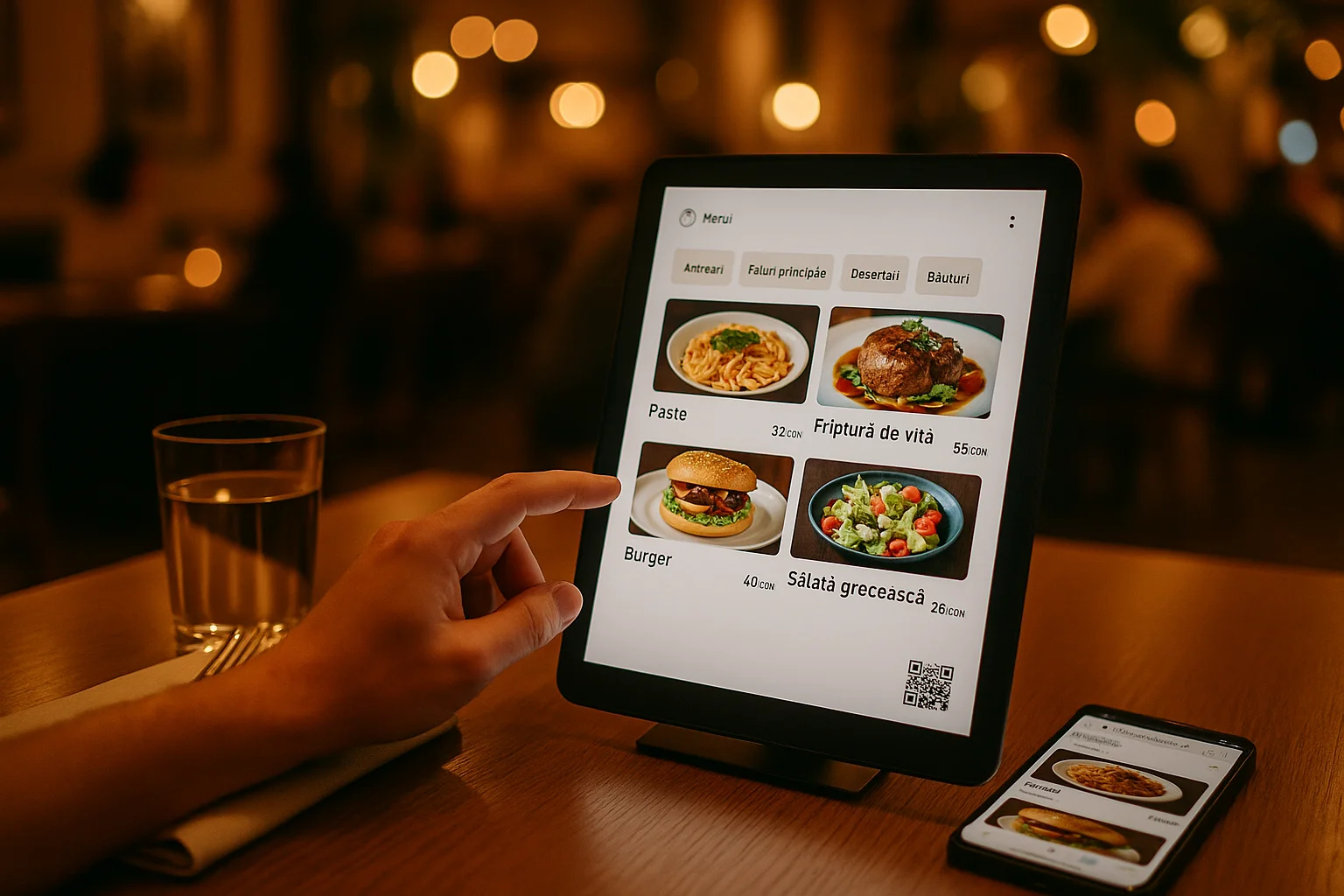
What digital menu means in 2026: HoReCa trends
The restaurant industry is undergoing a profound transformation, and digital menu 2026 no longer means just a QR code stuck on the table. Today, a well-built digital menu is a complete marketing, communication, and operations tool — one that connects the restaurant with the customer before, during, and after the visit. If you're a restaurant owner or HoReCa manager and want to stay competitive, you need to understand what this evolution brings and how you can take advantage of it.
What digital menu 2026 means: more than a simple QR
A few years ago, a digital menu was the equivalent of a PDF accessible by scanning a QR code. In 2026, customer expectations and technological possibilities have grown exponentially. A modern QR digital menu integrates information about allergens, nutritional values, quality product images, online orders, and even table reservations — all accessible from a single scan.
The 2026 customer is informed, in a hurry, and digitally connected. They want to know what they're eating, how much it costs, and whether they can book a table before arriving at the restaurant. A modern digital menu meets all these needs without staff intervention. This is the new definition of the restaurant experience.
Solutions like Menivo have understood this shift and have built platforms that go beyond simply displaying products, offering a complete digital ecosystem for restaurants of all sizes. If you're curious what this looks like in practice, you can read how to create a digital menu for a restaurant in 10 minutes.
Essential features a QR menu must have in 2026
Not all digital menu solutions are equal. If you want to choose the right platform or evaluate what's missing from your current setup, here are the truly useful features a professional QR menu must offer in 2026:
- Allergen and nutritional value management — legally mandatory and essential for customer safety. Menivo includes full allergen support and an AI-powered nutritional value calculator. Read more about legal obligations regarding allergens in Romania.
- Real-time updates — prices and product availability can change at any time, without reprinting costs and without delays.
- Multilingual support — in 2026, foreign tourists are an increasingly important segment. A menu available in Romanian and English (or other languages) is a direct competitive advantage.
- Integrated online ordering — customers can place orders for delivery or pickup directly from the menu, without phone calls and without third-party apps.
- Online table reservation — one of the most sought-after features in 2026, which reduces staff workload and increases occupancy rate.
- Customer reviews and feedback — collected directly from the menu, these build the restaurant's reputation and provide valuable insights into the customer experience.
- Statistics and analytics — data on scans, popular products, and customer behavior, useful for informed business decisions.
A digital menu that checks all these boxes isn't a luxury — it's the minimum competitive standard for a modern restaurant in 2026. You can compare different existing solutions by reading the article Menivo vs. other digital menu platforms.
Why the online reservation feature is indispensable in 2026
One of the biggest points of friction between restaurants and customers has always been the reservation process. Unanswered phone calls, lost WhatsApp messages, double bookings — all of these cost the restaurant both customers and reputation. In 2026, integrating reservations directly into the digital menu definitively solves this problem.
Through Menivo's online reservation feature, customers can select the date, time, and number of people directly from the menu, without calling and without waiting for manual confirmation. The restaurant receives the notification instantly and can confirm or decline the reservation from the admin panel. This automation significantly reduces the administrative workload and eliminates human error.
Furthermore, a reservation feature integrated into the menu creates a coherent flow: the customer sees the menu, gets excited about the offer, books the table — all in a single digital journey. This is the type of experience that 2026 customers consider standard. Discover more about how this feature works in the dedicated article: table reservation — the new feature that brings you more reservations.
Digital menu trends 2026: what's next in the HoReCa industry
Beyond the already established features, the HoReCa industry is moving towards several clear directions that will redefine the digital restaurant experience in the short and medium term.
Artificial intelligence integration is becoming increasingly present. From automatic AI-based allergen generators to smart nutritional value calculators, restaurants now benefit from tools that previously required nutritionists or specialized consultants. Menivo has already integrated such features — you can learn more about the AI-based allergen generator available on the platform.
Advanced visual customization is another clear trend. Restaurants want to differentiate themselves, and a digital menu customized with the venue's branding, colors, and visual identity is becoming a communication element just as important as interior decor. Drag-and-drop editors and digital flyer creation tools respond exactly to this need.
POS system integration represents the natural next step. A digital menu connected to the restaurant's management system allows automatic synchronization of stock, prices, and product availability — completely eliminating discrepancies between what the customer sees on the menu and what they can actually order. Menivo is preparing for a major upgrade in this direction.
How to transition from a classic menu to a digital menu in 2026
Many restaurant owners delay digitizing their menu due to the perception that the process is complicated or costly. In reality, with the right tools, the transition can be complete in less than a day. The Menivo platform, for example, allows the creation of a complete digital menu by following a few simple steps:
- Register for free at menivo.io
- Add the restaurant with its name, address, and logo
- Create menu categories (Appetizers, Main Courses, Desserts, etc.)
- Add products with photos, prices, descriptions, allergens, and nutritional values
- Generate the unique QR code from the dedicated section
- Download and display the QR code in the restaurant — on tables, at the entrance, or on any promotional material
If you want a detailed step-by-step guide, you can find it here: creating a restaurant menu in Menivo — step-by-step guide. The transition from a printed menu to a digital one isn't just a technological decision — it's a business decision that reduces costs, increases flexibility, and improves the customer experience.
Conclusion: digital menu 2026 is the standard, not the exception
In 2026, digital menu is no longer an innovation reserved for premium restaurants in big cities. It is the standard that customers expect wherever they are — from local bistros to five-star hotels. Features such as online reservations, integrated orders, allergen management, and nutritional values are not optional — they are basic expectations of the modern consumer.
If your restaurant doesn't yet have a complete and functional digital menu, now is the right time to take the step. Start with the best reasons why it's worth implementing a digital menu and discover how Menivo can transform your daily operations. Register today at menivo.io and build the digital menu your restaurant deserves.